When is the best time to visit Tamarindo?
The best time to visit Tamarindo depends on what you value. Dry season, roughly December–April, offers more reliable sunshine and calmer seas, along with peak crowds and prices.
Green season, roughly May–November, brings mostly afternoon rain, greener hills, fuller waterfalls, more consistent surf, and better value. For most tours, book mornings and keep afternoons flexible; September and October are the wettest stretch.
How the rain actually works
Green season rain in Guanacaste is mostly an afternoon-and-evening event: clear or partly cloudy mornings, clouds building after lunch, and a hard, warm downpour that usually passes within hours. All-day rain happens, but it's the exception — most common around September and October, the wettest stretch.
Guanacaste is also Costa Rica's driest province, so 'rainy season' here is milder than what you may have read about the rest of the country. The hills turn green, the dust settles, prices drop, and the crowds thin out. That's the trade.
Book mornings, keep afternoons loose
The single most useful green-season habit: put every activity in the morning slot. Surf lessons, boat trips, ATV rides, and estuary safaris all run in the morning anyway — you're just choosing the window that was already best.
- Surf: morning sessions get lighter winds year-round; green season adds more consistent swell.
- Boats: morning sails have calmer seas and better snorkel visibility.
- Estuary safaris: wildlife is most active early — rain or no rain.
- Afternoons: pool, hammock, massage, or a long lunch while it pours.
What actually gets better
- Waterfalls run at full volume — La Leona and the Rincón-area falls are at their best.
- Everything is green: the same ATV trail that was dust in March is jungle in September.
- Prices and availability: tours and rooms that sell out in February can often be booked days ahead.
- Turtle season begins: leatherback nesting at Playa Grande starts roughly in October.
- Sunsets, honestly, improve — clouds make better skies than empty blue.
Purpose-built rainy-day bookings
A few tours are genuinely better suited to wet weather — or indifferent to it. Keep one in your back pocket for the day the morning forecast looks grim.
- Coffee and chocolate tours — inland, mostly covered, and the crops literally need the rain.
- Hot springs and mud baths — already wet; rain is atmosphere.
- White-water rafting — higher water can mean better rapids (operators adjust for safety).
- You'll get soaked anyway: waterfall hikes, tubing, and canyon tours don't care about drizzle.
Top-rated options
 WaterfallsFrom $160
Sloth Watching + Waterfall & Organic Coffee and Chocolate Tour
 Day TripsFrom $135
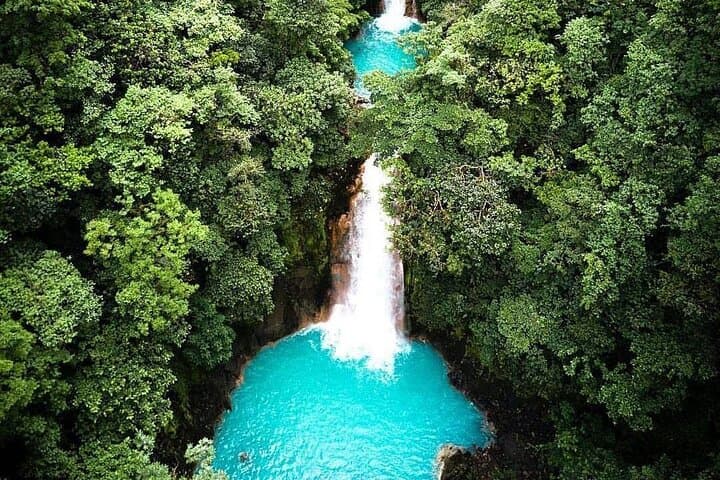
Rio Celeste Hiking, Sloth Sanctuary & Llanos de Cortes Waterfall Tour
 ZiplineFrom $145
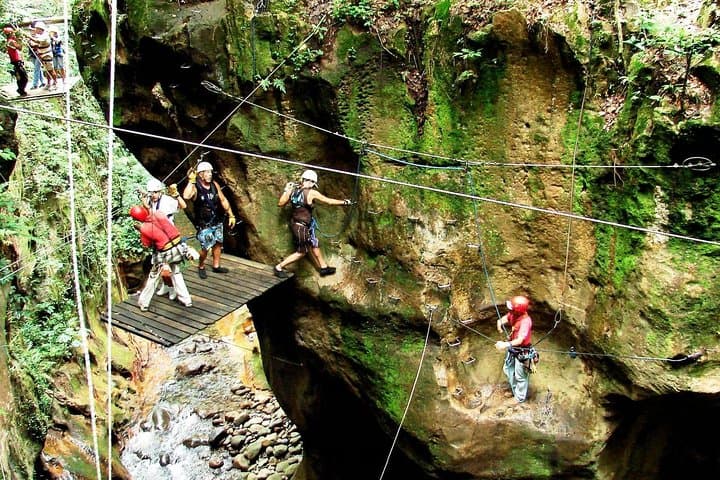
Guachipelin Adventure Volcano Zipline Horseback River Tubing Combo
What to adjust or skip
- Río Celeste after heavy rain — the famous blue can temporarily cloud; ask the operator about the past few days before booking.
- The dirt roads south (Avellanas, Negra) get muddy — take the tour pickup or a 4x4, not a compact rental.
- September–October is the wettest window: still workable with morning discipline, but pack accordingly.
- Bring a dry bag for phones, quick-dry clothes, and sandals with straps. Umbrellas are pointless; rain here falls sideways-adjacent.